
From the Cradle to the Grave
Iran buries its founder on Baghdad's terms. The CBI welds 3 more smuggling doors shut. Iraq funds its own sky. Al-Zaidi packs for Washington.
Tuesday, July 7. Baghdad. Khamenei's funeral has wound through Iran since the weekend, and tomorrow it crosses the border. The coffin of a man killed in a February airstrike gets carried into Najaf and Karbala, the two holiest cities in Shia Islam, by a government Tehran neither chose nor controls. Iran will sell it as a show of strength. Watch what Baghdad does with its hands while the world watches the hearse.
Because today, under the funeral coverage, Iraq shut down 3 more currency-smuggling houses and kept stacking the delegation it flies to Washington in 8 days. Yesterday, in Baghdad Fills the Chamber, we told you to watch for Khamenei's cortege to reach Najaf and Karbala. That is tomorrow. But the story for your money is not the funeral. It is what the host is building while the guest is buried.
The Corpse That Waited for a Ceasefire
Start with the thing no one on cable will explain to you. February 28 is the day the strike killed Khamenei. July 9 is the day he goes in the ground. In a faith that buries its dead inside a day, washed and wrapped before the next sunset, that is 131 days of a body kept above the earth. Iran calls it wartime logistics. Read it plainly and it is a regime that could not safely bury its own founder until it had a signed ceasefire with Washington and Baghdad's clearance to move the cortege. Read that timeline again. They did not rush to mourn him. They waited until it was safe.
Then look for the man who inherits all of this, and he is not there. Mojtaba Khamenei was made supreme leader in March. He has not shown his face or used his voice in public since. He runs the office through handwritten notes read out on state television, and he has stayed out of sight through the whole week of mourning, even as 3 of his brothers walked in the Tehran processions. The people actually steering Iran this week are a parliament speaker, Ghalibaf, and a Guard general, Vahidi. The poster on the wall in Tehran and the hand on the wheel are not the same person.
Here is why that matters 500 miles away in Baghdad. A patron holds a client 2 ways: it watches, and it pays. Iran can do neither right now. It cannot show its own leader, it could not bury its own dead on time, and its own currency is scraping all-time lows at home. The grip that ran Iraqi politics for 20 years is not being pried loose by Iraq. It is rotting on its own, and Baghdad is simply the first to move like it knows.
Three More Doors Welded Shut
July 6. Iraq's central bank revoked the licenses of 3 exchange houses, Al-Rawajib, Saba, and Al-Nitaq, for breaking Regulation No. 1, the rule that decides who may legally trade dollars. Dry sentence. Enormous consequence. A licensed exchange house is exactly where cheap dollars, bought at the official 1,300 rate, get quietly resold on the street near 1,530. Pull the license and you weld one of those doors shut. This is the latest in a steady run of revocations the bank has worked through all year.
Now set it against the calendar. In 3 days, on July 10, Iraq's ASYCUDA customs system becomes mandatory at every crossing, and the paper import invoice, the smuggler's oldest trick, stops clearing. Every shipment gets a digital timestamp instead. So the bank is pulling licenses in the very week the paper trail those licenses hid behind disappears. Two moves in the same week, and they close the gap from both sides.
Egypt ran this exact play in 2016. For years the pound carried an official rate and a black-market rate, and a fortune bled through the gap between them. Cairo floated the pound, then went straight at the street, arresting the dealers and shutting the informal houses that fed the second rate. Inside a few months the two rates collapsed into one and the black market lost its reason to exist. The lesson Baghdad clearly took: you do not close a currency gap with a speech. You close it by strangling the plumbing that feeds the other price.
This is the section that matters most for your money, so stay honest with me here. The street did not revalue today. The gap is still wide, near 18%. But every welded door and every digital invoice is a demonstration, pointed at the same mid-July room in Washington, that Iraq can finally police its own currency.
8 Days to the Oval Office
Every thread this week runs to one date. In roughly 8 days, Prime Minister al-Zaidi lands in Washington with a planeload of Iraqi business owners behind him, his first trip to a US White House as prime minister. Read the week backwards from that plane and the coincidence drains out of it. The Immunity Trap arrests, the license pulls, the air-defense bill, yesterday's Halliburton contract. These are not separate headlines. They are an audition, staged for one room.
The quiet piece is the budget. This week Iraq began drafting its 2027 accounts on a performance basis for the first time, tying money spent to results delivered, the exact reform the IMF has pushed for a decade. A country that picks up IMF-shaped bookkeeping the same fortnight it courts American capital is speaking a language Washington reads on sight. It is saying, in the only dialect that room respects: we will run the books the way your institutions want them run.
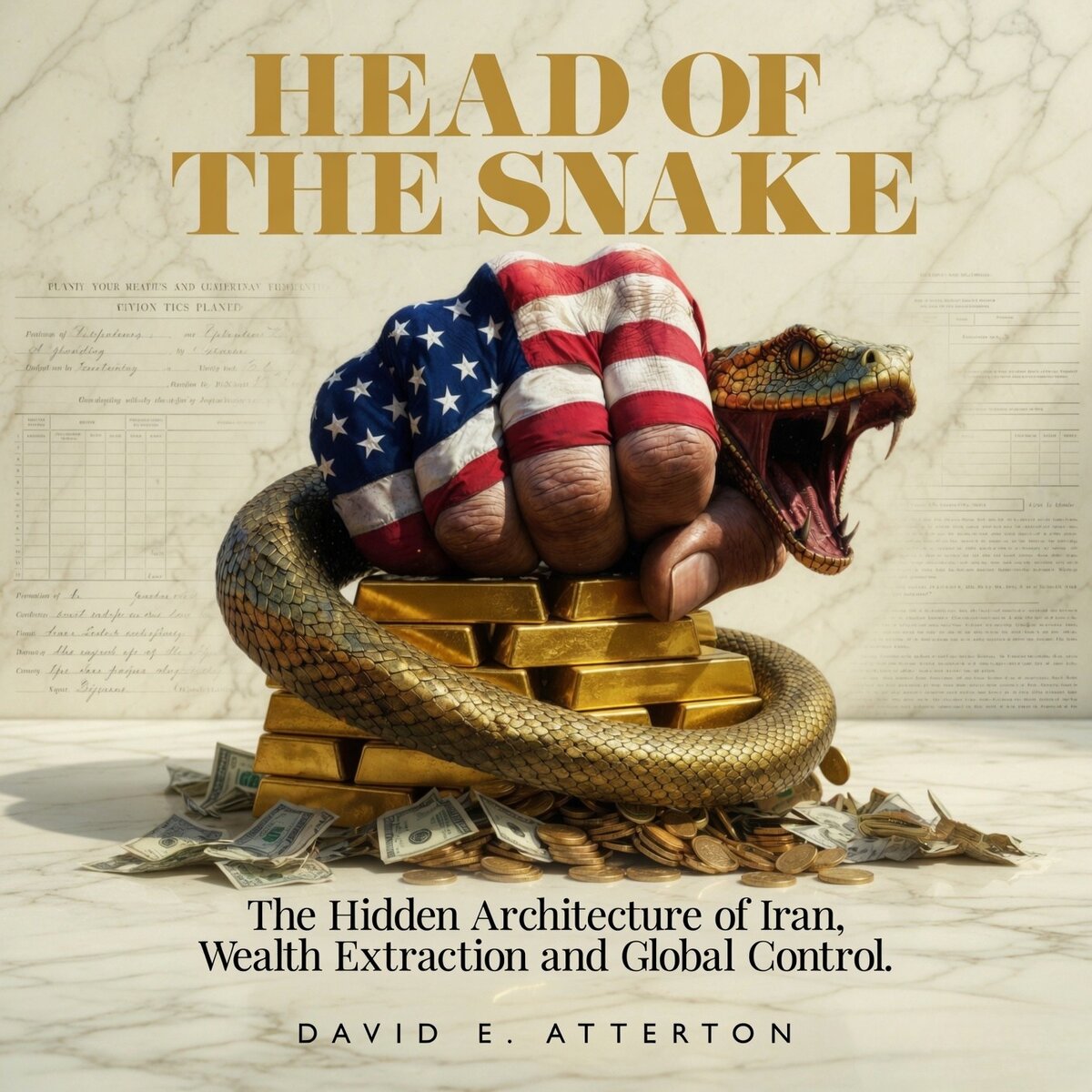
The book behind the briefing
Head of the Snake
The full 19,500-word documented case behind today's read. Every claim sourced - Treasury actions, OFAC press releases, parliament records.
Take 25% off with code 25XOFF at checkout.
Get the BookWhat Stands Behind the Dinar While You Wait
One more layer, and it is the one that ties Baghdad to the wider board. A currency is only as good as what sits behind it, and right now the whole world is trading paper for metal. Foreign central banks hold the smallest slice of US Treasuries this century, and China has cut its own pile nearly in half, to around $652 billion. In the same window, Hong Kong switched on its own dollar gold-clearing system, and the talk of revaluing the US Treasury's gold, still booked at $42 an ounce while it trades north of $4,000, keeps circulating in rooms that do not circulate rumours.
So why does a Baghdad briefing end in gold? Because in The $40.8 Billion Tell we showed you Iraq quietly doubling its US bond holdings while it held the dinar cheap, stacking the reserve depth a stronger currency needs to defend its own price. Iraq is not sitting the reset out. It is loading the shelf a revalued dinar will someday stand on. The gold moving through Hong Kong and the licenses torn up in Baghdad are the same story, told at 2 different sizes.
The Read
This week, a dead ayatollah is carried into Najaf, 4 months late, by a country his network used to own. A central bank tears up 3 more smuggling licenses. A customs net goes fully digital in 3 days. And a prime minister packs for Washington. Four scenes, all heading in one direction.
Here is the thread to hold. What you are watching is not a funeral. It is a handover. On one side of the ledger the old order goes into the ground: a founder they could not bury on time, a successor no one has seen, a Guard that spent the week firing on tankers in Hormuz because threatening the traffic is the only reach it has left. On the other side, the country that used to take that order's phone calls is building the machine that replaces it, bank by bank, bill by bill, contract by contract.
There is a precedent worth teaching, and Tehran will not like it. When a great power's client finally outgrows it, the break is almost never a battle. It is paperwork. Austria walked out of the Soviet occupation in 1955 without firing a shot, by signing a treaty and taking its neutrality. Moscow's empire did not fall that day. It simply stopped being obeyed in one more country. A Baghdad license revocation and a budget written for the IMF are that same quiet act. Not drama. Just the slow work of ending the obedience.
One honest note, because we owe you the same story for the past 2 briefings running. We have pointed you at the official Gazette, waiting for it to name Iraq's last ministers, and Baghdad has stayed silent. Do not read that silence as a stall. Results here routinely land days behind the vote, and a government that just arrested its own political class is in no hurry to hand that class a printed list of who now holds the guns. The names are coming. The silence in front of them is a government taking its time on the one page its enemies most want to read.
Step back to the oldest fact in the story. Iraq is the cradle, the ground where writing and cities and law were invented, thousands of years before Tehran was the capital of anything. For 20 years the cradle took its orders from that younger neighbour. This week the neighbour's founder is carried across Iraqi soil on his way to the grave, and the cradle does not stop to bow. It pulls licenses. It drafts budgets. And it flies to Washington. The old order passes through on its way into the earth, and the ancient country it used to command is the one still standing when the mourning ends.
So here is what actually earns your attention this week. July 10, when ASYCUDA goes live at every border and the cheap-dollar door swings shut. The mid-July flight, when al-Zaidi's wheels leave the ground for Washington. And whether Mojtaba Khamenei ever shows his face, or whether Iran keeps running on a cardboard cutout.
Thursday the coffin reaches its grave in Mashhad. The cradle it crossed on the way is already building what comes after it.
Reset Intelligence / Direct Access
Pre-event positioning. Post-event deployment.
Direct Access members get every IR Report, every daily briefing and unlimited open dialogue with David over email, with customised support for your specific situation.
Subscribe $39/mo - Direct AccessLifetime Access
Direct Access tier, paid once. $499. Twenty-five seats capped. Reply to this email at exit_fiat@resetintelligence.com with the word lifetime.
Common questions about the Iraqi dinar
- Is the Iraqi dinar revaluation real?
- When will the Iraqi dinar revalue?
- What will the Iraqi dinar revalue at?
- Why is the Iraqi dinar valued so low?
- Is the Iraqi dinar a scam?
- Where can I safely buy Iraqi dinar?
- How do I exchange Iraqi dinar after a revaluation?
- Will I owe tax when my dinar revalues?
For plain answers to every common question, see the full Iraqi Dinar FAQ.
Or put your question to the RI Research Assistant. It answers in seconds and will conduct deep research to find you the answer.
Sources & References
- CBI revokes licenses of Al-Rawajib, Saba, and Al-Nitaq exchange houses under Regulation No. 1 - Central Bank of Iraq | Shafaq News
- Iraq ASYCUDA customs verification mandatory at every border July 10 - Iraqi News
- Egypt floats the pound and cracks down on the parallel market, 2016 - Reuters | IMF
- Khamenei killed Feb 28, buried July 9 in Mashhad after 4-month delay, cortege to Najaf and Karbala July 8 - CNBC | Al Jazeera | NPR
- Mojtaba Khamenei unseen since February, skips funeral, 3 brothers attend - Al Jazeera | RFE-RL | Time
- Ghalibaf and Vahidi among the figures running Iran - FDD | Time
- Iraq parliament first reading of air-defense funding bill; Korean Cheongung-II order - Breaking Defense
- Kurdistan civil servants unpaid 40 days, finance minister approves July salaries - The New Region
- al-Zaidi mid-July Washington visit with business delegation - The National | Times of Israel
- Iraq drafts 2027 budget on performance basis for first time - Zawya
- IRGC reportedly fires on 2 commercial tankers in Strait of Hormuz - Al Jazeera | Wikipedia
- Foreign central banks at lowest US Treasury share this century, China halved to $652 billion - CNBC
- Hong Kong launches US-dollar gold clearing; US Treasury gold booked at $42 vs $4,000+ spot - SCMP | Treasury Fiscal Data
- Austria regains sovereignty via the 1955 State Treaty and neutrality - Britannica
- Internal callbacks - Baghdad Fills the Chamber | The Immunity Trap | The $40.8 Billion Tell
- Book - Head of the Snake