The Immunity Trap
Iraq arrested 47 of its own before dawn. Its integrity-committee vice-chair had 20 billion dinars at home. The cabinet seats July 5. Washington is next.
Sunday June 28. At 1:30 in the morning, the entrances to Baghdad's Green Zone went dark. Security forces shut the approaches at Al-Alawi, the Suspension Bridge, Yarmouk and Al-Harithiya, and the most protected square mile in the country woke up locked in. By dawn, the unit Iraq built to fight ISIS had arrested 47 of its own political class.
Among them was the vice-chair of Iraq's parliamentary integrity committee. By Iraqi-press accounts, security teams pulled 20 billion dinars in cash and a hoard of gold from her home and led her out alongside her son. The committee meant to police the theft was sitting on the proceeds.
No shots. No standoff. They gave themselves up the moment they were surrounded, because those who run Iraq's patronage networks have spent two decades sure of one thing. Their immunity always held. Sunday it did not.
Most outlets will write this off as just another corruption story, one more headline from a place that never runs short of them. They will all miss the same thing. The arrests are not the story. The trap they walked into is.
The Force That Answers Only to Him
Ali al-Zaidi, Iraq's prime minister, did not use the police, and he did not work through the interior ministry. He sent the Counter Terrorism Service, the American-trained force that answers to his office and to no one else.
He had no other clean way to do it. Interior and defence, the ministries that run the police and the army, are the seats still empty in his Iraqi cabinet, and he controls neither. Using either one would have meant warning the very people he was about to arrest. So he reached for the one force he does command, and sent it after the same factions that kept those seats empty. That he used a counter-terror unit at all tells you how he reads the corruption: as a threat to the state, not a matter of bad bookkeeping.
Footage from Iraqi outlets showed armoured vehicles and CTS operators moving through the Sikma Complex inside the Green Zone, the residential compound beside the American embassy where many of Iraq's politicians keep their families. The force that once cleared Mosul of Islamic State was clearing Iraq's political class instead.
The Watchdog in the Net
Look at who they took. Muthanna al-Samarraie, head of the 15-seat Azm Alliance and a sitting member of parliament, taken from his fortified residence with his office manager. Ali Maarej, an Iraqi deputy oil minister. Ziad al-Janabi, reported to be a former chair of the parliamentary integrity committee. And Alia Nassif, that committee's current vice-chair, the cash and the gold pulled from her own house.
Read that pairing again. The committee's serving number two and one of its former chairs, arrested in the same sweep, for corruption. The watchdog was part of the kennel.
Common questions about the Iraqi dinar
- Is the Iraqi dinar revaluation real?
- When will the Iraqi dinar revalue?
- What will the Iraqi dinar revalue at?
- Why is the Iraqi dinar valued so low?
- Is the Iraqi dinar a scam?
- Where can I safely buy Iraqi dinar?
- How do I exchange Iraqi dinar after a revaluation?
- Will I owe tax when my dinar revalues?
For plain answers to every common question, see the full Iraqi Dinar FAQ.
Or put your question to the RI Research Assistant. It answers in seconds and will conduct deep research to find you the answer.
Ground sources inside Iraq reveal what these officials were really protecting. Several of them, al-Janabi among them, are named as the ones who kept two reforms from ever passing: tighter controls on the banks, and the oil revenue law that would finally show where the money goes. Clean banks and a transparent oil ledger are the exact conditions Iraq has to meet before the dinar can be revalued anywhere near its real worth. They buried those reforms to keep the skim alive, the daily dollar auction and the oil contracts that only pay while the books stay dark. Many had already moved their own money into American banks, certain the crackdown would never reach them. On Sunday it did.
Clean House
The dates line up too neatly for chance. The night before the raids, al-Zaidi told reporters he would finish his cabinet inside 2 weeks. By the next morning he was already clearing the people in the way of it.
Lay the calendar beside that promise. Parliament returns from recess on July 1, 2 days from now. A special session to fill the final 9 cabinet seats, interior and defence among them, lands on July 5. Around mid-July, al-Zaidi flies to the White House to meet President Trump. As we wrote when this trip first got its deadline, he is governing to finish an Iraqi government, not to win an election, which is exactly why he can afford to jail his own allies. Nearly every other piece moving across Iraq is set to land before he flies.
A diplomat in the capital told reporters the security operation was, in his phrase, part of the Washington visit preparations. You do not arrive at the White House asking for backing with an Iraqi parliament full of members who moved Iranian money. You arrive with the house cleaned.
The easy read is that a Shia premier jailed his rivals. But the facts cut against it. One of the country's most senior Sunni politicians, al-Samarraie, was among those arrested, and the senior Sunni establishment did not cry foul. Mohammed al-Halbousi, former speaker of Iraq's parliament and the most powerful Sunni figure in Iraq, publicly backed the campaign, and former premier al-Sudani's bloc endorsed it too.
When those who would normally cry sectarian persecution are the ones backing it, the sectarian story falls apart. What is really happening is much simpler: the Iraqi state is taking back institutions that its own factions had carved up and run as private businesses. Al-Zaidi told his cabinet on Sunday it was, in his words, only the first stage.
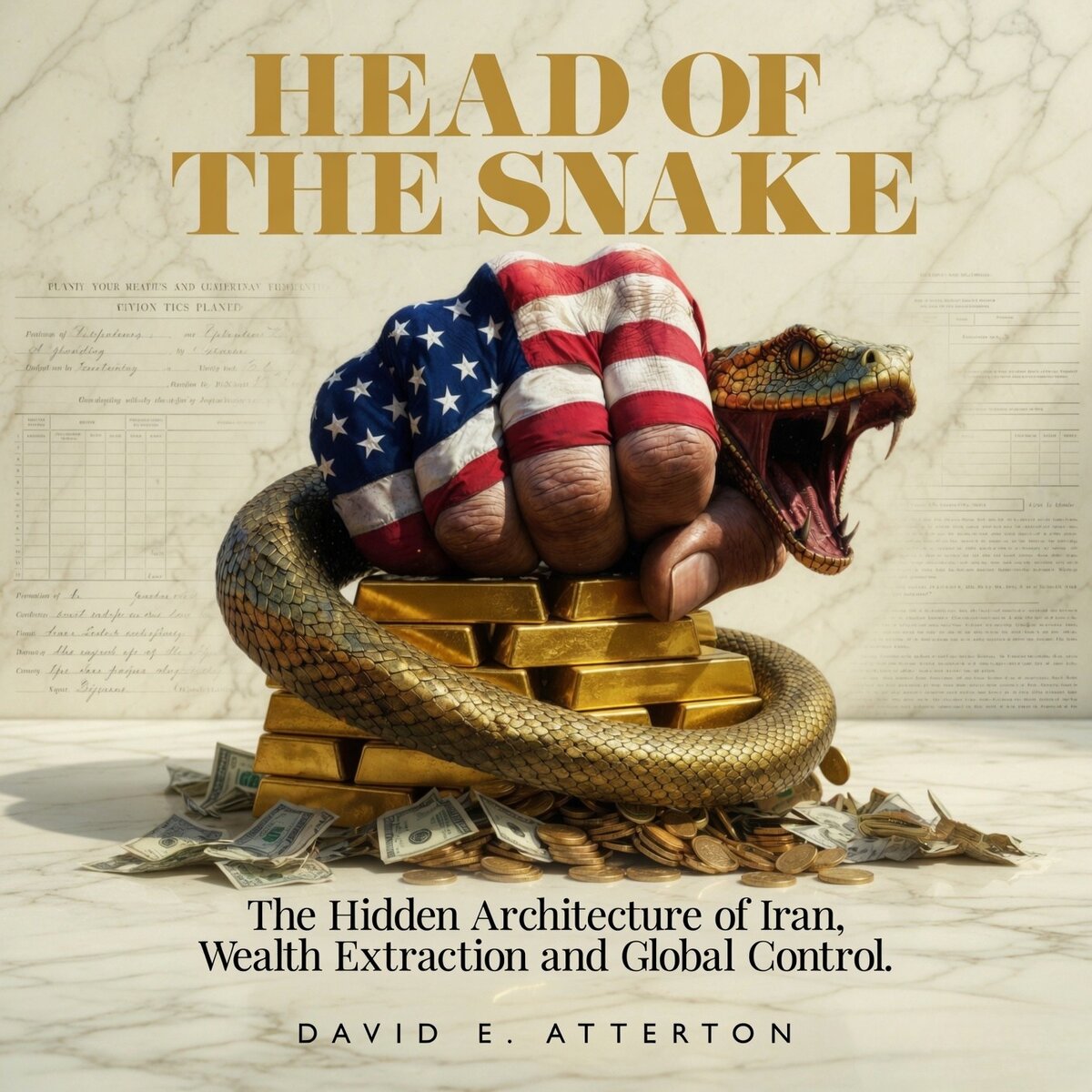
The book behind the briefing
Head of the Snake
The full 19,500-word documented case behind today's read. Every claim sourced - Treasury actions, OFAC press releases, parliament records.
Take it 25% off through Sunday with code 25XOFF at checkout.
Get the BookThe Money and the Missiles
A second thread runs under the arrests. The reporting says the networks hit in the raids were not only stealing. They were moving dollars and Iranian oil for the armed factions Tehran funds inside Iraq.
The other half was across the border. When the war ended at Versailles, the deal reopened the Strait of Hormuz toll-free and gave Tehran 60 days to leave it alone. We watched Iran test that promise for the first time a few days ago, a projectile into a passing ship. This weekend it tested again, and harder.
June 27. American forces struck Iranian military sites after Iran hit another tanker in the strait. Iran answered with missiles and drones at an American air base in Kuwait and the Fifth Fleet headquarters in Bahrain. Then both sides pulled back, and a senior US official said they had agreed to stop all military action, with talks on the strait set for Tuesday in Doha.
Our read on the peace has not changed since the signing: real, but easily broken. Iran lost the war and most of its proxies, including the ones inside Iraq, so the chokepoint is the one card it still holds, and it keeps reaching for it. The ceasefire is 11 days old, and the hand on the valve is in Washington, not Tehran. The President has already said he will finish the job if it does not hold. Both valves, the money inside Iraq and the missiles across the border, were throttled in the same few days. Neither one is welded shut.
The Price of the Seat
Pull back far enough and one shape keeps repeating, the one we have tracked across Iraq for months. Take back the oil. Clean the books. Then ask for the seat.
The oil moved first. As we wrote in Baghdad Opens the Taps, Iraq has been reopening every export route it controls. This week it weighed going further: pumping past its OPEC quota to make back what the war cost, and even, by some accounts, leaving OPEC altogether as the Emirates did. That call waits until after Washington.
The books come next. In The Dollar Handshake we watched the new head of Iraq's central bank sit down with the top US envoy in Baghdad and accept a slate of banking reforms, the slow job of bringing Iraqi banks back into the dollar system. The same oil-ministry case we followed there, built on the confessions of former deputy minister Adnan al-Jumaili, has since produced tens of millions more in seized cash and assets, around $86 million of it this month. Sunday's arrests grew out of that same file. Clean books are the entry fee for getting back through the dollar door.
The Read
Yes, this is a corruption story. Iraq produces those by the season. But look past the charge sheet and Sunday was about something rarer than theft. It was about the end of being untouchable.
For 20 years a whole class of people in Baghdad lived above the law and built their lives on the certainty it would stay that way. That certainty was the trap. Immunity never hid them. It kept them in plain sight. On the payroll. In the contracts. On every deed they signed. The people who would one day arrest them read every line and waited. The shield was a leash, and the dogs are now in their cages.
And this is the part the local headlines miss. Baghdad was one room in a house that spans the globe. In the same few days the US Treasury moved on three more. A scam empire in Cambodia. Mineral smugglers bleeding the Congo. The money behind Sudan's war. We have tracked this for weeks in Everything, Everywhere, All At Once. What looks like a run of unrelated scandals is one campaign, and the protection layers that Head of the Snake says have to fall before the system can change are coming down, in one capital after another.
Sit with the size of that. For decades these networks were treated as permanent, too big and too connected to touch. This week they are being pulled down across a string of countries at once, by people who built the cases in silence, long before the first door got knocked down. This is bigger than a news cycle. It's the old rules of the world being rewritten.
And in Iraq, every thread of this points at one date. Within a fortnight al-Zaidi flies to Washington, and he intends to land with a finished government, the last seats filled by names he trusts and the Americans will sign off on.
We set out why that trip is the whole game in our report on the road to Washington. A clean house is the price of the meeting, the same toll we watched Baghdad start paying in The Dollar Handshake. The meeting is what finally moves the oil law buried for 19 years. Once the cabinet is seated and the revenue is split, the budget that follows is the one that can let the dinar finally move toward what it has always been worth.
For a generation the powerful sold everyone the idea that immunity is permanent. It was always a rental, and this week the lease is being called in. In Baghdad, the ones who held the dinar down are sitting in cells, and the rest of us are about to learn what it was worth all along.
Reset Intelligence / Direct Access
Pre-event positioning. Post-event deployment.
Direct Access members get every IR Report, every daily briefing and unlimited open dialogue with David over email, with customised support for your specific situation.
Subscribe $39/mo - Direct AccessLifetime Access
Direct Access tier, paid once. $499. Twenty-five seats capped. Reply to this email at exit_fiat@resetintelligence.com with the word lifetime.
Sources & References
- Green Zone raids, 47 officials arrested by the Counter Terrorism Service - Al Jazeera | Middle East Eye | The National
- Named detainees and the 20 billion dinar and gold seizure - The National | Al Jazeera
- Azm Alliance response and al-Zaidi "only the first stage" cabinet remarks - Shafaq
- Diplomat: the operation is part of the Washington visit preparations - Arab News
- al-Zaidi to finalise the cabinet within two weeks - Kurdistan24
- July 5 special session to seat the final ministers - Kurdistan24
- al-Jumaili oil-ministry case, around $86 million in seized cash this month - Al Jazeera
- US and Iran halt strikes, Hormuz talks set for Tuesday in Doha - Republic World
- Iraq foreign reserves and the OPEC quota deliberation (paywalled) - Iraqi News
- Internal callbacks - Three Weeks to Washington | The Dollar Handshake | Baghdad Opens the Taps | Everything, Everywhere, All At Once
- Book - Head of the Snake