Two Hands on the Dinar
Iraq opened an account to count the seized billions while Tehran leaned on Hormuz. One hand jails the thieves, the other pulls the dinar home. Vote July 5.
Tuesday June 30. Yesterday, in The Immunity Trap, we showed you what the rest of the press filed away as routine: the dawn raids inside Baghdad's Green Zone were not a one-off graft sweep but a trap built over 20 years, sprung on a political class that believed its immunity would never break. That operation did not end when the handcuffs went on. It moved to its next stage. This briefing is that stage.
While American and Iranian negotiators sit down in Doha to argue over who controls the Strait of Hormuz, Iraq has opened a bank account. Not for a person. For the money it is pulling out of the walls of its own politicians. The government spokesman, Haidar al-Aboudi, confirmed a dedicated state account where every dinar, every dollar, every bar of gold seized in the operation gets deposited and counted. Prime Minister Ali al-Zaidi locked up the dogs first. Now the state takes the cash.
And the net is still widening. By the government's own count it has reached 67 names inside 24 hours, with fresh ones surfacing in every interrogation, building out from what former deputy oil minister Adnan al-Jumaili has already admitted. Among those taken: Alia Nassif, the former MP whose riverside estate and half-million-dollar stable of horses are now under the spotlight. The same week, Abbas Araghchi, Iran's foreign minister, was in the capital, and al-Zaidi is planning his trip to meet President Trump.
Two hands are working the dinar this week. One arrests the people who stole it. The other pulls the money itself back home.
Baghdad Counts
The arrests were never the only point. The recovery is a major play most are missing. Those networks were left in plain sight on purpose, watched and traced for as long as it took, then taken on a single morning. That morning was Sunday. The counting starts now.
And the counting is already significant. Investigators have now pulled back over $107 million tied to the oil-ministry case, including 98 billion Iraqi dinars and $11 million in cash, some of it stacked in pyramids of bundled hundred-dollar bills, some dug out of holes four metres deep with machines. Alongside the cash sit 70 properties, 21 vehicles and around 3 kilograms of gold. By the government's own account, close to 1,000 officials are now under investigation. An entire political class is being run through the books.
The courts are moving in step with the money. This week the former director-general of the General Commission for Taxes was sentenced to 10 years and stripped of 22 properties, his wife convicted alongside him for laundering. Arrest, seizure, sentence, all running at once.
An account to hold it is a small administrative line that tells you something larger. This money is not being frozen in place or fought over in chambers for a decade. It is being booked back to the Iraqi state, item by item, with a receipt. For a country that has watched its wealth vanish for a generation, the novelty is not just theft. It is the ledger it lands back on.
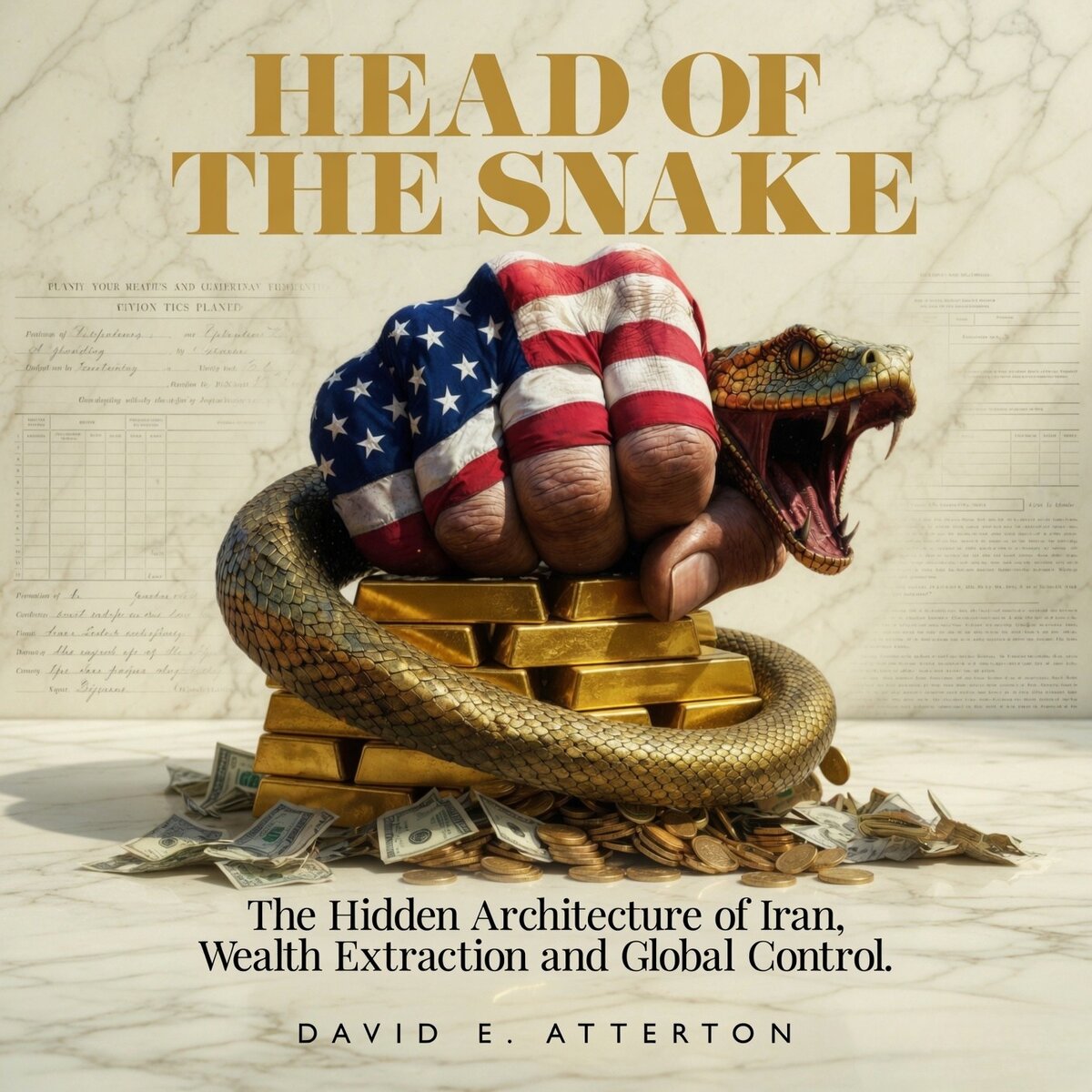
The book behind the briefing
Head of the Snake
The full 19,500-word documented case behind today's read. Every claim sourced - Treasury actions, OFAC press releases, parliament records.
Take it 25% off through Sunday with code 25XOFF at checkout.
Get the BookTwo Hands on the Dinar
Here is the part the headlines will not connect, and it is the reason a premium reader should slow down.
Common questions about the Iraqi dinar
- Is the Iraqi dinar revaluation real?
- When will the Iraqi dinar revalue?
- What will the Iraqi dinar revalue at?
- Why is the Iraqi dinar valued so low?
- Is the Iraqi dinar a scam?
- Where can I safely buy Iraqi dinar?
- How do I exchange Iraqi dinar after a revaluation?
- Will I owe tax when my dinar revalues?
For plain answers to every common question, see the full Iraqi Dinar FAQ.
Or put your question to the RI Research Assistant. It answers in seconds and will conduct deep research to find you the answer.
The recovery is not just bookkeeping. It is monetary policy carried out with handcuffs. Every hoard pulled from a politician's wall is currency that had been taken out of the economy and stashed, waiting. Some of it, ground sources say, was already moving offshore, parked until the day the dinar was worth many times more, then cashed at the top. The people best placed to bet on a higher dinar were the ones hoarding the notes and writing the rules that hold the rate down.
Iraq's own transparency commission has put the total stolen since 2003 at more than $320 billion. Other Iraqi estimates run higher still. What was recovered this week is the first handful of that pile, and al-Zaidi calls it only the first phase. The number to watch is not today's tally. It is the trajectory.
Pulling that currency back in is not a side effect of the arrests. It is the groundwork for a reprice. Think about what any country does in the last stretch before it changes what its money is worth. It cleans the banks, the slow job we watched begin in The Dollar Handshake. It forces trade onto an honest rail: on July 10 Iraq makes electronic verification mandatory at every border crossing, so no certificate of origin and no commercial invoice clears unless it is digitally checked through the ASYCUDA customs system, with central servers now logging every shipment and every dinar of revenue. The parallel dollar that lived on paper invoices loses its hiding place, and Baghdad's stated aim is to hand merchants dollars at the official rate instead, which pushes the dinar up. And it gets the dirty notes off the street, because you do not reset a currency while the old skim still runs underneath it.
Iraq has talked for over a decade about stripping three zeros from the dinar, swapping a 25,000-dinar note for one worth 25 dinars, the same money carried in fewer zeros. The central bank governor "officially" still calls it a project under constant review, no new notes printed, no date set. That is redenomination, and it is not a revaluation. One changes the digits on the note. The other changes what the note is worth. Iraq is lining up both.
This is where people tie themselves in knots, so let us be clear on it. The zeros are domestic housekeeping. They simplify the notes Iraqis carry at home and leave what those notes buy untouched, and they are not how anyone holding the currency from abroad gets paid. That payment is the revaluation, and our position on the rate has not shifted: plan on 1:1, read the number on your note as dollars, and treat anything higher as a blessing on top, not the plan.
The exchange that delivers our event does not cross the central bank's counter in Baghdad. It settles off-soil, through the Tier-1 international banking layer, against collateral pre-positioned for the purpose, not drawn from Iraq's own reserves, and it honours the face value on the note. You can see the plumbing. You cannot see the name behind it. We laid the rate case out in The Case for Revaluation and the settlement side in The Structures They Won't Mention.
Here is the part that should sit well with every honest holder. The arrests we walked through in The Immunity Trap are not only justice. They are a lock on the door. Every official taken this week is one more man who will not be standing at the window when the dinar reprices, holding a fortune in stolen notes and waiting to cash them at the top. Baghdad is doing the one thing that makes a revaluation fair. It is making sure the men who looted the country for 20 years are not the ones who get rich the morning it is finally worth what it should be. The thieves are locked up before the windfall, not after.
Stack it in order and the shape is unmistakable. Clean the banks. Put the borders on an auditable rail. Pull the stolen notes home and lock out the men who stole them. Redenominate to a smaller, more accurate set of notes. And then revalue the cleaned currency toward what Iraq's oil and gold and signed contracts say it should be worth. You do not run this entire play unless the reprice is the prize waiting at the end of it.
The Premier Who Cannot Be Bought
You cannot leash a man who wants nothing. That is what makes al-Zaidi dangerous to the class he is arresting. Remind you of someone?
He spent Monday with the European Union's ambassadors in Baghdad, telling them corruption in Iraq will not be tolerated and that he means to recover every stolen public dinar. Then he turned to Iraqi media and laid out his own terms. The debt he inherited stood at 208 trillion dinars, by his own count. He will draw no salary. He will accept no gift, he said, not even a necktie. There will be no state inside the state. He called the campaign a decision with no reverse gear, and the corruption it targets a threat the Iraqi state can no longer survive. And, the line that reframes everything else, he will not stand again for parliament.
Read that last part against the arrests. A premier who will not seek re-election has no donors to protect, no bloc to keep sweet, no second term to trade favours for. He holds office to close out a government and clean a currency, not to chase a vote. That is what lets him put his own allies in handcuffs, and why they never saw it coming.
Tehran Knocks
The squeeze is that the country whose networks al-Zaidi is dismantling is the same country leaning on him to slow down.
Araghchi flew into Baghdad on Sunday, hours after the raids, on a visit booked before anyone moved. He met al-Zaidi, President Amidi, the speaker and the national security adviser in sequence, a full diplomatic press. His message was blunt: regional states must not let their soil be used against Iran, and any move to set up separate arrangements for the Strait of Hormuz would, in his words, increase tensions and delay the reopening. Tehran wants the strait on its terms alone.
That is the pressure landing in Doha today, where American and Iranian negotiators are seated over exactly this question.
The ceasefire from the Versailles deal is holding, but barely, and Iraq is caught in the middle of it: rewarded by Washington for moving fast, warned by Tehran to move slow. The deadline that matters now is September 30, the date Baghdad has set for Iran-backed armed groups to surrender their weapons, timed to the end of the US-led coalition's mission. Asaib Ahl al-Haq and Kataib Imam Ali have agreed to give up their guns. The hardest holdouts, Kataib Hezbollah and Harakat Hezbollah al-Nujaba, have refused until US forces leave, and they are the same networks whose money the Green Zone raids are now cutting. Take the funding first, and the gunners get harder to feed.
The Calendar Tightens
Every deadline in Iraq now points one way.
July 1. Parliament returns from recess tomorrow. A special session on July 5 is meant to seat the final 9 ministers, among them interior and defence, the two security ministries al-Zaidi does not yet control. A fully formed cabinet then flies to Washington around the middle of the month. He is racing to walk in with a finished government and a cleaned house.
The money pressure behind that race runs through New York. Iraq sells its oil for dollars that land in an account at the Federal Reserve Bank of New York, and Washington controls the tap. It slowed transfers to Baghdad earlier this year to lean on the politicians, the squeeze we covered in No Dollars for Baghdad. Reserves at home have slipped to $97.8 billion at the end of April, down from $100.3 billion in March, as the war cut into oil revenue. So al-Zaidi arrives in Washington needing that tap opened wider. Ground sources on the wires put the sum he wants released at around $30 billion, enough to carry months of state salaries, though we cannot confirm it with Baghdad or the Treasury and hold it as a strong signal, not a settled fact. Clean the house, and the door opens.
The Read
Two things happened in Iraq this week, and the world is watching the wrong one.
The camera is on Doha, where American and Iranian negotiators are fighting over a strait. That is the loud story, the one with warships and missiles and a ceasefire that could crack by the weekend. Stay with me, because the quiet story is the one that changes your life, not the news cycle.
While Tehran knocks on the strait, Baghdad is counting. It opened an account this week and started booking back the cash it pulled from the walls and the holes and the offshore accounts of its own ruling class. Pyramids of hundred-dollar bills. Gold. 20 billion dinars from a single home. The first handful of a pile its own watchdog measures at over $320 billion stolen since 2003.
You have been told for years that the dinar is a scam, a dead currency in a broken country. Here is what the people who hoarded it knew that you were told to ignore. They did not stuff their walls with a currency they thought was worthless. They buried the gold and moved the savings offshore because they expected the dinar to be worth far more in time, and wanted to be holding it when it was. The corruption was a bet on the upside. The arrests take that bet off them.
There is a tilt on the other side of the table too. The President says that he likes a weaker dollar and calls it good for America, and his former trade chief has argued since 2024 that Washington should push it down. A cleaned, rebuilt dinar rising while the dollar softens is the even playing field, built from both ends.
So watch both hands. One is pulling Iran's grip off the strait and the proxies and the money lines, the slow severing we have tracked for months as Iraq reopened the oil routes it holds. The other is pulling the stolen dinar home, cleaning the supply, clearing the road to redenominate and then to revalue. A government does not jail its own parliament, count the cash on a public ledger, and fly to the White House in the same fortnight by accident. It does it when it intends to change what their money is worth.
Parliament returns tomorrow, the last seats fill by July 5, and a cleaned government flies to Washington right behind them. Watch the week, not the date.
Reset Intelligence / Direct Access
Pre-event positioning. Post-event deployment.
Direct Access members get every IR Report, every daily briefing and unlimited open dialogue with David over email, with customised support for your specific situation.
Subscribe $39/mo - Direct AccessLifetime Access
Direct Access tier, paid once. $499. Twenty-five seats capped. Reply to this email at exit_fiat@resetintelligence.com with the word lifetime.
Sources & References
- Recovery in the oil case over $107 million including 98 billion IQD and $11 million, 70 properties, 21 vehicles, gold; about 1,000 officials under investigation - Al Jazeera | OCCRP
- Former tax director-general sentenced to 10 years and stripped of 22 properties for laundering - Shafaq | Iraqi News
- State account for seized funds, first phase ongoing - The National
- 67 arrests in 24 hours, the Alia Nassif estate, al-Zaidi rules out re-election - Kurdistan24
- More than $320 billion stolen since 2003 - OCCRP
- ASYCUDA electronic verification mandatory at Iraqi border points July 10, central monitoring of revenue, 25% tariff cut - 964media | Rudaw
- Central bank delete-the-zeros redenomination, project under review with no timeline - Iraq Business News (paywalled)
- Araghchi visit and Hormuz warning - Al Jazeera
- US and Iran Doha talks on the strait Tuesday - TechTimes
- September 30 deadline for Iran-backed groups to disarm, factions agreeing and refusing - Arab News | The National
- Trump welcomes a weaker dollar; Lighthizer on dollar devaluation - NPR | Forbes
- Iraq foreign reserves fall to $97.8 billion - Shafaq
- US holds Iraq's oil dollars at the New York Fed and slowed transfers to pressure Baghdad - Al Jazeera | The National
- Internal callbacks - The Immunity Trap | The Dollar Handshake | The Case for Revaluation | The Structures They Won't Mention | Three Weeks to Washington | The War Ends at Versailles | No Dollars for Baghdad | Baghdad Opens the Taps
- Book - Head of the Snake