VES - The First One Moved
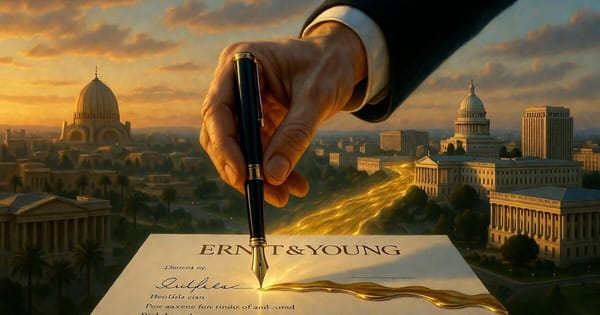
On the same day the President addressed the nation about Iran, the Treasury Department quietly removed Venezuela's acting president from the sanctions list. Nobody connected the two.
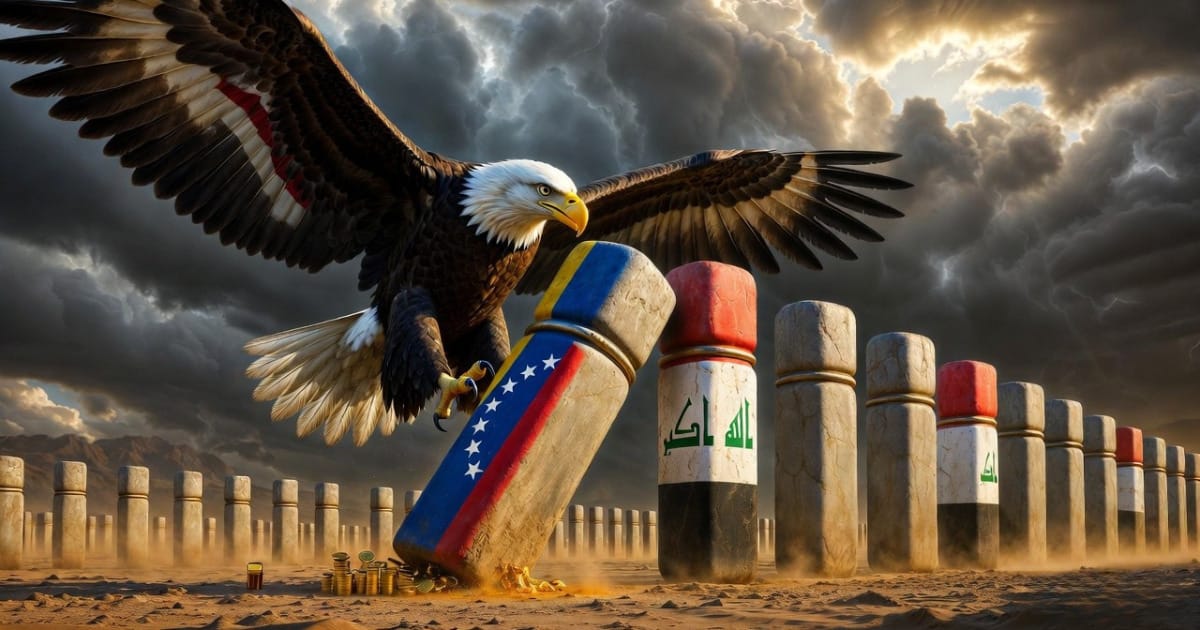
On the same day the President addressed the nation about Iran, the Treasury Department quietly removed Venezuela's acting president from the sanctions list.
Nobody connected the two.
On January 3, US special forces captured Nicolas Maduro in Caracas. Operation Absolute Resolve. Delta Force breached his compound at 2 AM, and by sunrise the longest-running authoritarian regime in the Western Hemisphere was in a Manhattan courtroom facing narcoterrorism charges.
His vice president, Delcy Rodriguez, took over. Within three weeks she signed the most significant oil reform in Venezuela's modern history. The Hydrocarbons Law, passed January 29, broke the Chavez nationalization model and opened Venezuela's oil sector to foreign companies for the first time. Private firms can now manage oilfields at their own risk and cost. The state keeps a 30 percent royalty, reducible to 15 in joint ventures.
Then the sanctions started lifting. OFAC issued General License 46 in early February, authorizing US companies to buy Venezuelan crude. General License 47 followed days later. General License 49 on February 13 authorized brand new US investment in Venezuela's oil and gas sector. BlackRock published an assessment. Goldman issued a market brief. Bloomberg reported Wall Street lining up to buy Venezuelan bonds that had been in default for years.
On March 2, we mapped this exact sequence in Venezuela Template Confirmed. Remove the regime. Install cooperative leadership. Reform the oil sector. Lift sanctions. Let capital flow in. We told you the template would repeat.
Yesterday, April 1, OFAC took Rodriguez off the Specially Designated Nationals list entirely. She can now access US assets and deal directly with American companies. The final door opened.
And tomorrow, April 3, the new royalty and tax regime for foreign oil companies goes live. Articles 51 through 59 of the Hydrocarbons Law, the provisions that set the terms for private investment, activate two days after Rodriguez came off the sanctions list. The door opened. The terms are set. Capital can move.
The same day Trump told the nation he would bring Iran back to the Stone Age.
The Template
Read the sequence again.
Venezuela. Regime captured. New leader described as cooperative. Oil sector reformed within weeks. Sanctions lifted progressively. Foreign capital positioning. Currency stabilization pending.
Now read Iraq.
Iranian proxy network departing. New government forming around Sudani, the man who sat with the CBI Governor and moved the rate in 2023. Oil export routes multiplying under crisis pressure. CBI compliance program running. Institutional money increasing positions in commodity-backed currencies at record pace.
Same administration. Same playbook. Same timeline.
The bolivar is currently not tradable on international forex markets. It has lost 480 percent against the dollar in twelve months. The parallel market runs at 560 against an official rate of 400. Fourteen zeros have been stripped from the currency in thirteen years. But analysts are now discussing what was unthinkable six months ago. Exchange rate unification. A currency board pegged to the dollar and backed by oil reserves. A new monetary instrument anchored to the Orinoco Belt. For the first time in a generation, the trajectory is not inevitably downward.
The currency cannot move until the political obstacle is cleared. In Venezuela, Maduro was the obstacle. He is in a cell in Manhattan. In Iraq, the Iranian proxy network was the obstacle. It crossed the border into Iran last week.
Two countries. One playbook. Both running right now.
The Signal in the Middle
Now the speech itself.
Everyone heard Stone Age. Everyone heard two to three weeks. Everyone heard "hit them extremely hard." That was the part you were supposed to hear.
Buried in the middle, Trump described Iran's new leadership as "less radical and much more reasonable." He said regime change was never the goal but "has occurred because all of their original leaders are dead." He said military objectives would be complete "very shortly." He said the Strait of Hormuz would "open up naturally."
Then he directed Vice President Vance to privately communicate to Tehran that the United States is open to a ceasefire. With conditions.
This is the same Vance that Iran specifically requested as their negotiating channel. Not Witkoff. Not Kushner. Vance. Because Tehran's read is that he wants this conflict wrapped up. According to three US officials, discussions between Vance and Iranian mediators about a ceasefire in exchange for reopening Hormuz are already underway.
Iran's Foreign Ministry called Trump's ceasefire claim "false and baseless." Of course they did. You do not accept terms publicly while your president is writing letters to the American people about self-defense and sovereignty. You deny, you posture, and you negotiate through the channel that was just built for you on national television.
What Gold Heard
Gold had been climbing for four straight sessions heading into the speech. It touched $4,800 intraday. The highest level in two weeks.
Then Trump spoke.
Gold fell over $100. Dropped 3.5 percent to $4,641. Silver dipped 6.8 percent to $70.90. On a speech that promised to escalate the war for another two to three weeks.
That does not happen when money expects a long fight. Safe havens do not collapse on escalation unless the room is hearing something the headline did not carry.
The metals heard "very shortly." They heard "less radical." They heard "open up naturally." They heard Vance.
The pump was the Stone Age. The gold chart told you where the real play is.
48 Hours in Baghdad
While the world processed the speech, the US Embassy in Baghdad issued a security alert. Iran-backed militia groups may conduct attacks in central Baghdad within 24 to 48 hours. American citizens were told to leave Iraq immediately via overland routes to Jordan, Kuwait, Saudi Arabia, or Turkey. An American journalist was kidnapped near the Baghdad Hotel last week. The suspect was linked to Kata'ib Hezbollah.
This is not background noise. This is a real security threat on real streets.
But it is also the last reflex of a network that has already lost its political function. In From Exodus to the Cradle we documented the PMF crossing into Iran. Convoys at the Abadan checkpoint. Video confirmed at Khorramshahr. Al Jazeera published the full report the next day. The armed infrastructure that blocked Iraqi governance for 17 years is now physically on the other side of the border, fighting for a regime that Trump just told the nation is finished.
The violence is real. The leverage behind it is gone.
Three Routes From One
Iraq's economy is under pressure that almost nobody in the West is covering.
Oil revenue has dropped nearly 90 percent since the Strait of Hormuz closed on March 4. Iraq's public sector salary bill runs $6.3 billion a month. Food prices have climbed 15 to 25 percent. The country imports 90 percent of its food and medicine through the same chokepoint that is now a war zone. Foreign reserves sit around $97 billion. That sounds like a cushion until you do the math against a $6.3 billion monthly burn with almost no revenue coming in.
But here is what nobody is mapping.
Before March 4, Iraq exported oil through one route. Basra. Through Hormuz. That was it.
Today Iraq has three.
Kirkuk-Ceyhan reopened on March 18. We covered this in When The Smoke Clears when it happened. First time that pipeline has been used in over a decade. Running at 250,000 barrels per day through Turkey with room to scale to 650,000.
The Syria route went active. SOMO has contracts for 650,000 metric tons per month through the Al-Waleed border crossing to Baniyas port. Running through June.
The Jordan pipeline is under emergency seven-day repair.
The war forced Iraq to build the diversified export infrastructure it never built in twenty years of peace. These routes do not disappear when Hormuz reopens. They become redundant capacity. Iraq comes out of this war with more ways to sell oil than it went in with. The chokepoint dependency that gave Iran leverage over Iraqi exports for two decades is being broken. Not by policy. By necessity.
The Block
One obstacle remains where it has been for months.
Maliki is still fighting. Reports indicate he has rejected the compromise candidate for Prime Minister. The man Washington already vetoed. The man the Framework already withdrew. Still holding the door.
April 11 is nine days away. The presidential vote requires two-thirds. If the Kurdish parties do not agree on a single candidate and Maliki keeps blocking, the session stalls again.
We mapped this sequence in The Monday Vote when 220 signatures forced the emergency session. The president unlocks the prime minister. The prime minister unlocks the budget. The budget requires a rate. The rate has not moved since February 2023 when Sudani sat with CBI Governor Al-Alaq and adjusted it overnight. We explained why in Iraq's $16 Trillion Question.
The parallel market is squeezing from the pressure. Street rate hit 1,545 this week against an official rate of 1,300. That is an 18.8 percent gap. Wider than what we reported in Before The Nation. Every point of that spread punishes Iraqi families buying imported food and rewards every dollar smuggler moving cash east.
A country sitting on $97 billion in reserves, generating record revenue per barrel, with three functioning export routes and a budget frozen because the exchange rate is the challenge. That is not a country waiting for permission. That is a country waiting for a government.
Final thoughts.
Last night in Before The Nation we told you we would be listening for what Trump did not say about Iraq.
He did not say a word. Of course he didn't.
But the Treasury Department said something about Venezuela that connects every thread we have been pulling since March. The template we mapped is completing. The same playbook. The same sequence. Remove the political obstacle. Reform the oil sector. Lift sanctions. Let capital position. The currency is last.
Vance is talking to the people who spent 17 years making sure Iraq could not form a government. The metals are pricing in a short war. Iraq is building export infrastructure under crisis pressure that will outlast the crisis itself. And the administration just cleared the final sanctions hurdle for the country where the template was born.
In When The Smoke Clears we put two checklists side by side. The military one being completed on television. The economic one being assembled in quiet rooms. Today the military checklist got louder. The quiet rooms kept working.
The pump was for television. The fake was for the endgame.
Paid subscribers receive this briefing every night with full audio narration and the intelligence layer underneath the headlines. The pattern work that called The Staging Window before the 82nd deployed, The Fourth Level before Trump confirmed the tankers, and The $40.8 Billion Tell before The Signature.
If today's read lands, tomorrow's briefing goes deeper.
$0.17 a day. Less than the coffee you are holding right now.
Sources & References
- OFAC lifts sanctions on Rodriguez, off SDN list April 1 - Al Jazeera | CBS News | OFAC
- Hydrocarbons Law Articles 51, 55-59 effective April 3 - Mayer Brown
- Maduro captured January 3, Operation Absolute Resolve - CBS News | CNN
- Rodriguez signs Hydrocarbons Law reform January 29 - CNN | Al Jazeera | King & Spalding
- OFAC General Licenses 46, 47, 49 authorizing US oil investment - Holland & Knight | Mayer Brown
- Wall Street positioning on Venezuela bonds - Bloomberg
- Venezuela currency reform scenarios - Planet Banknote
- Trump directs Vance to communicate ceasefire to Iran - CNBC | Bloomberg
- Iran requested Vance as negotiating channel - Axios
- Vance and mediators discussing ceasefire, three US officials - Axios
- Trump: "less radical, more reasonable," regime change quote - AP/ANI | US News transcript
- Gold fell 3.5% to $4,641, silver 6.8% to $70.90 after speech - TradingKey | Yahoo Finance
- Oil surges past $107, Brent up 6.5% - CNBC
- US Embassy Baghdad 48-hour departure warning - US Embassy Baghdad
- Iraq oil revenue dropped ~90% since Hormuz closure - OilPrice | Rudaw
- Iraq public sector salaries $6.3B/month - The National | Rudaw
- Kirkuk-Ceyhan pipeline resumed March 18, 250K bpd - The National | Iraq Business News
- Syria export route 650K MT/month through Al-Waleed - Shafaq News
- Iraq parallel market 1,545 vs official 1,300 - Iraqi News
- Food prices up 15-25%, import dependency - Chatham House
- Iraq reserves $97.4B, 12 months import cover - Shafaq News | Iraq Business News
- PMF crossing into Iran confirmed - Al Jazeera
- Iran denies ceasefire request - Al Jazeera | The Hill
- 9 of 12 CF blocs back Sudani - Arab Weekly
- CBI rate adjustment Feb 2023, 1,460 to 1,310 - CBI historical record
- Internal callbacks - Venezuela Template Confirmed | Before The Nation | When The Smoke Clears | From Exodus to the Cradle | The Monday Vote | Iraq's $16 Trillion Question | The Staging Window | The Fourth Level | The $40.8 Billion Tell | The Signature
This briefing was published 7 days ago for subscribers.
Members get every briefing the morning it drops. Subscribe to stay a week ahead.
READ IR-001 FREE
GET THE BOOK
SUBSCRIBE FROM $5/MO